
The text message arrived at 5:47 PM.
“Office party. 7 PM. Please come. Urgent.”
I stared at my phone, then at myself—home clothes, wet hair, and a mental inventory of everything that needed to happen before I could walk out the door looking like someone who hadn’t just been summoned from her couch.
The saree in my cupboard caught my eye. Beautiful. Traditional. The kind that takes forty-five minutes and a patient mother to drape properly.
I had seventy-three minutes total.
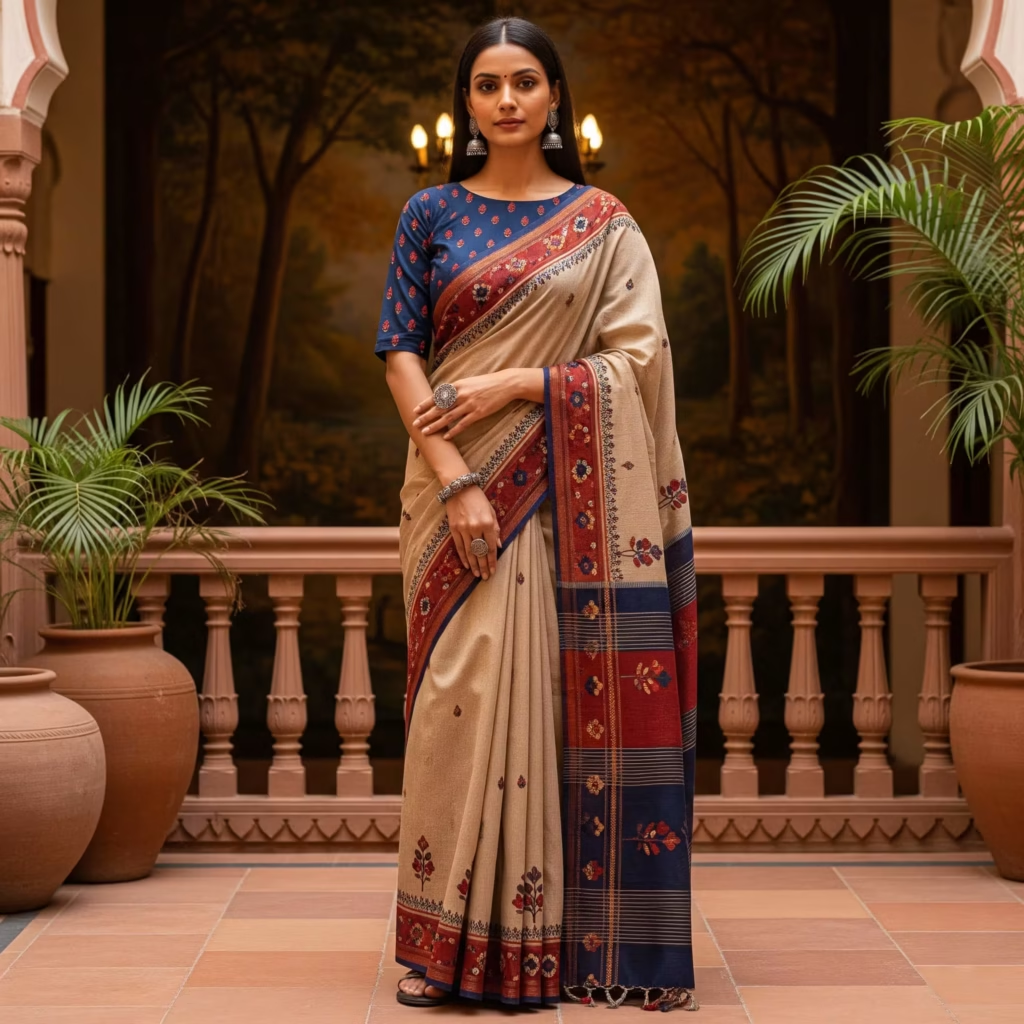
What happened next changed everything I thought I knew about sarees. I walked into that party at 7:08 PM—fashionably late, not disastrously so—wearing a saree that earned three compliments before I even reached the drinks table. One woman asked if I’d had it custom-draped. Another wanted my tailor’s number.
I told them the truth: I’d done it myself, in under ten minutes, using techniques that have nothing to do with traditional draping and everything to do with understanding how fabric actually behaves when you stop treating it like a sacred text and start treating it like what it is—cloth, cleverly cut and cleverly folded.
The Lie We’ve Been Told About Sarees
Here’s something nobody tells you: the traditional way of draping a saree is beautiful, but it’s not the only way. It’s also not the fastest way, the easiest way, or even the most flattering way for many modern contexts.
The six-yard saree was designed for a different time—a time when women had hours to get ready, when mothers and sisters lived nearby, when the pace of life allowed for elaborate rituals. That time isn’t now. Now we have Zoom calls that run long, children who need attention, jobs that demand presence, and social lives that don’t consult our calendars before scheduling events.
The saree adapted beautifully to every other change in Indian women’s lives. It’s time it adapted to this one too.
I’m not suggesting we abandon tradition. I’m suggesting we stop letting tradition become a barrier between us and the clothes we love. A saree you can’t wear because you don’t have time isn’t a saree you own—it’s a saree that owns you.
The First Revolution: Pre-Stitched Sarees
Let’s start with the obvious solution, the one that purists love to hate: the pre-stitched saree.
Yes, it’s technically a saree-shaped garment rather than a traditional unstitched drape. No, it doesn’t require any pleating, tucking, or pinning. Yes, it looks exactly like a properly draped saree once it’s on.
I bought my first pre-stitched saree with skepticism and shame, as if I was cheating at womanhood. I wore it to a family dinner and waited for someone to notice. My aunt complimented the pallu. My cousin asked where I’d bought it. My mother, who can spot a badly draped saree from across a wedding hall, said nothing.
Because there was nothing to notice. The drape was perfect. The pleats fell exactly where they should. The pallu stayed put when I moved.
Pre-stitched sarees have evolved dramatically in the last few years. The good ones now use invisible stitching that doesn’t pull or distort the fabric. They’re available in everything from daily-wear cotton to heavy silk. They can be altered to fit your exact measurements.
And here’s the part that matters: they take exactly two minutes to put on. Zip, adjust, go.
What to look for: Check that the stitching runs along the natural fall lines of the saree, not across them. The pleats should be attached only at the top edge, allowing them to move naturally when you walk. Avoid anything where the pleats are stitched all the way down—you’ll look like you’re wearing a curtain.
The Second Revolution: Pre-Made Pleats
Maybe you’re not ready for a fully pre-stitched saree. Maybe you love the ritual of draping but hate the part where you stand in front of the mirror for fifteen minutes trying to get your pleats straight.
Enter the pre-made pleat system.
This is my personal favourite innovation in the saree world. You buy a normal, unstitched saree. Then you buy a separate pleat set—a piece of fabric that matches your saree, already pleated and stitched at the top, with loops or hooks that attach to your petticoat.
Here’s how it works:
Drape the saree around you normally, tucking in the plain end.
Instead of making pleats from the saree itself, you attach the pre-made pleat set at your waist.
Arrange the attached pleats to fall naturally.
Drape the pallu as usual.
Total time: under five minutes. Perfect pleats every single time.
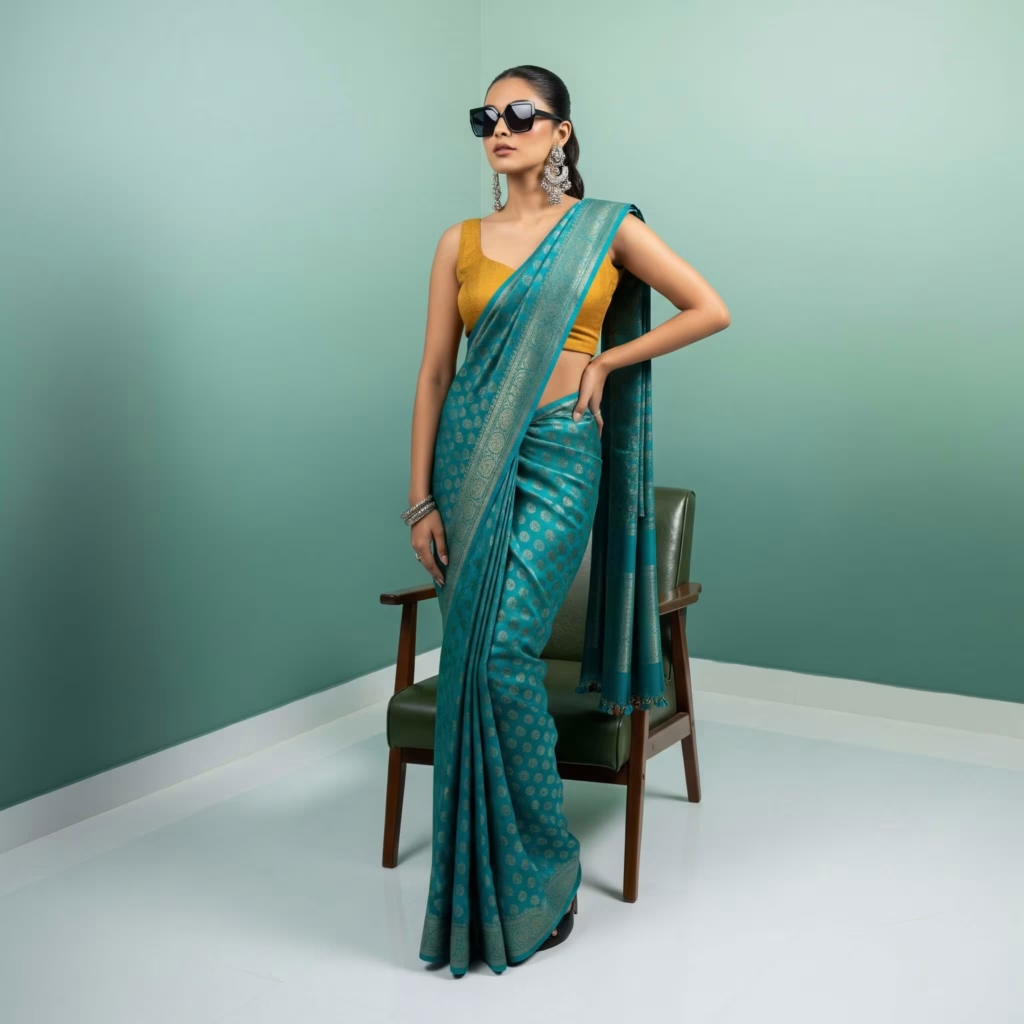
The genius of this system is that it preserves the traditional saree experience while eliminating the most time-consuming and skill-dependent part. You still get to choose the pallu drape, the fall, the overall look. You just don’t have to wrestle with pleats that refuse to cooperate.
Where to find them: Many saree stores now sell matching pleat sets. You can also have them made by any good tailor—just take a half-meter of your saree fabric and ask for a pleat set with a 4-inch deep waistband and loops for your petticoat string.
The Third Revolution: Emergency Techniques for When You Have Nothing Prepared
Sometimes life doesn’t give you time to buy special products or visit tailors. Sometimes you’re standing in front of your cupboard at 6:55 PM, staring at a normal six-yard saree, wondering how on earth you’re going to make this work.
I’ve been there. I’ve developed techniques that work even when you’re panicking.
Technique One: The Pre-Pinned Shortcut
Keep a small pouch in your saree cupboard containing: 10 safety pins (assorted sizes), 2 metre-long pieces of narrow elastic, and 1 brooch or decorative pin.
When you’re in a rush:
Tuck the plain end into your petticoat as usual.
Skip the crisp, structured pleats and softly bunch the fabric into relaxed folds—more layered than sharply defined.
Secure the gathered fabric at your waist using safety pins, not tucks. Pin horizontally so the pins don’t show.
Take the pallu, bring it over your shoulder, and secure it with the brooch.
Use the elastic pieces to create hidden loops that hold the pallu in place without pins showing.
This technique creates a soft, gathered look that’s actually quite fashionable. It reads as intentional draping, not rushed desperation. The key is confidence—if you act like you meant to have soft pleats, everyone will believe you.
Technique Two: The Belt Method
This is my favourite emergency technique because it requires nothing special—just a belt you probably already own.
Drape the saree normally but loosely, without worrying about perfect pleats.
Instead of tucking everything meticulously, put a wide belt over the saree at your waist.
Arrange the fabric above the belt to blouse slightly.
Let the fabric below the belt fall naturally.
Drape the pallu and secure with a single pin.
The belt hides any imperfect tucking and creates a defined waistline that makes the whole look intentional. It works best with medium-weight fabrics—too heavy and they’ll pull, too light and they’ll wrinkle.
Technique Three: The Ready-Made Loop
If you have five minutes to prepare, you can create a system that will save you time forever.
Take a spare petticoat and stitch small elastic loops at regular intervals around the waistband—front, sides, and back. Then, in your saree, stitch corresponding hooks or small safety loops at the points where you normally tuck.
When you’re in a rush, you simply hook the saree onto the petticoat loops. No tucking required. The hooks hold everything in place while you arrange the drape. Total time: three minutes.
The Fabric Factor: What to Wear When You’re in a Rush
Not all sarees are created equal when the clock is running. Some fabrics fight you. Some fabrics help.
Your best friends for rushed mornings:
Chiffon and Georgette – These fabrics move beautifully, pleat easily, and forgive imperfect draping. They also dry quickly if you need to spot-clean something.
Lightweight Silks – Tussar, Matka, and other textured silks have enough body to hold their shape but enough give to adjust easily. They also hide minor wrinkles better than glossy fabrics.
Cotton with Stretch – Some modern cottons include a small percentage of elastane. These are miracles for rushed draping—they move with you, don’t fight your adjustments, and recover from mistakes.
Fabrics to avoid when time is tight:
Heavy Kanjeevarams – These require proper draping and will punish shortcuts. Save them for days when you have time.
Crisp Chanderis – Beautiful but unforgiving. Every tuck shows, every pleat must be perfect.
Delicate Chiffons with Slippery Finishes – Some high-end chiffons are so slippery they won’t stay where you put them without extensive pinning.
The Five-Minute Blouse Fix
A saree may get all the attention, but the blouse is often what determines whether you leave the house calmly—or in mild chaos.
Blouses come with their own timing issues. Hooks misalign. Strings tangle. Straps slide. And somehow, the delay always happens when you’re already late.
So here’s a simple system that removes half the stress before it starts.
Keep three dependable “rescue blouses” in your wardrobe at all times:
A classic black blouse with a clean, versatile neckline
A nude or beige blouse that acts as a quiet neutral
A metallic-toned blouse—gold, silver, or bronze—that can lean festive or minimal depending on styling
These three will work with most of your sarees when you need to get dressed quickly. They aren’t meant to be perfect matches. They’re meant to be reliable.
For your everyday blouses, upgrade the basics. Use sturdy hook-and-eye closures that won’t give up mid-event. Add discreet elastic loops under the shoulders to keep bra straps in place. Small reinforcements make a big difference when time is tight.
What Quick-Drape Videos Don’t Tell You
Online tutorials make everything look seamless. The model stands straight, the lighting is flattering, and the pleats fall into place as if fabric has feelings and wants to cooperate.
Real life is different.
The first attempt may look awkward. That’s normal.
The second will improve.
Sometimes, one strategically placed safety pin solves everything.
And here’s the part no one mentions: the line between “rushed” and “effortless” is often just posture.
If you stand tall and feel comfortable, the saree reads as intentional. If you feel uneasy, even the most flawless pleats won’t fix that.
I’ve worn sarees draped in under ten minutes and been showered with compliments. I’ve also spent nearly an hour adjusting pleats only to feel uncomfortable the entire evening. The clock doesn’t determine elegance—confidence does.
The Bride Who Had Eight Minutes
There was a bride named Kavya whose wedding ceremony was scheduled for 11:00 AM.
At 10:45, she was still troubleshooting a makeup mishap. Outside her room, her mother held a treasured heirloom saree—a heavy silk piece that traditionally required patience and assistance to drape properly.
At 10:50, Kavya stepped out, assessed the time, and chose decisiveness over tradition.
She folded the saree lengthwise, wrapped it securely like a skirt, gathered the remaining fabric over her shoulder, pinned it neatly, and secured her waist with a belt.
Eight minutes.
It wasn’t the conventional drape everyone expected. But when she walked out, she looked entirely at ease. Not hurried. Not flustered. Just ready.
Years later, no one talks about how the saree was styled. They remember her laughter, the way she greeted her partner, the energy she brought into the room.
The saree supported the moment. It didn’t control it.
Build Your Own Saree Emergency Kit
Preparation beats panic every time.
Create a small, ready-to-use saree kit and keep it stocked. It turns last-minute chaos into manageable adjustments.
What to include:
Around 20 safety pins in assorted sizes
Pre-cut pieces of narrow elastic (about 6 inches each)
A few decorative brooches or statement pins
A neutral-toned belt wide enough to secure pleats
A compact sewing kit with threads matching your most-worn sarees
Pre-pleated sets for sarees you use frequently
Contact details of a dependable tailor for urgent fixes
With this kit in place, late invitations, unexpected events, or travel surprises become far less intimidating.
The Real Goal
After years of rushing through drapes, redoing pleats, and improvising fixes, I’ve learned something simple:
Perfection isn’t the objective. Presence is.
Spending forty minutes obsessing over symmetry can leave you drained before you even arrive. Spending ten focused minutes and stepping out the door with ease preserves your energy for what truly matters—the people, the conversations, the celebration.
A saree should work for you. It should highlight you. It should never demand that you earn the right to wear it.
Sometimes the most elegant choice is to trust your instincts, pin what needs pinning, adjust what needs adjusting, and go.
The quick saree isn’t settling.
It’s freedom.
What’s the fastest you’ve ever draped a saree—and how did it turn out? Share your story. The beautifully imperfect moments are often the most memorable.