
The first time I watched a bride cry over a colour, I didn’t understand.
She was sitting in a boutique in Jaipur, surrounded by lehengas in every shade imaginable—crimson, maroon, burgundy, rust. Her mother was pointing at a traditional red with gold zari, the kind of lehenga that had been worn by women in their family for four generations. The bride was holding a dusty rose.
“This is not a wedding colour,” her mother said. Not unkindly. Just matter-of-fact.
The bride looked at the rose, then at the red, then at me—the stranger who happened to be sitting nearby, waiting for my own appointment. Her eyes asked a question she couldn’t voice: Why does my wedding have to be someone else’s colour?
I’ve thought about that moment a lot in the years since. About how we choose colours for the most important day of our lives based on tradition, family pressure, Instagram trends, or what the store has in stock. About how rarely we ask the one question that actually matters:
What do I want to feel when I look back at these photos thirty years from now?
Because colour isn’t just colour. It’s memory in its purest form. It’s the first thing your brain records and the last thing it forgets. And on your wedding day, the colour you choose becomes the emotional backdrop for every single photograph, every video, every moment your children and grandchildren will revisit.
Red has served us beautifully for centuries. But red isn’t the only language your heart speaks.
The Language You Didn’t Know You Were Speaking
Let me tell you about Meera. Not the bride from Jaipur—a different Meera, a lawyer in Mumbai who planned her wedding for eighteen months and thought about her lehenga for at least twelve of them.
She walked into every boutique in the city, tried on every shade of red imaginable, and felt… nothing. Beautiful, yes. Bridal, certainly. But nothing that made her chest tighten the way her fiancé’s face did when he saw her in a simple blue saree at their engagement.
“I kept thinking something was wrong with me,” she told me later. “Every bride loves red. Every bride wants to feel like a traditional Indian bride. Why didn’t I?”
She finally bought a red lehenga because the deadline was approaching and everyone assured her she’d love it on the day. She didn’t. She wore it, smiled for photos, and changed within an hour of the ceremony ending.
The colour she’d chosen wasn’t hers. It was borrowed from generations of women who came before her, women she loved and respected, women whose approval she desperately wanted. But borrowing someone else’s colour is like borrowing someone else’s voice. You can speak the words, but the song will never be yours.
What Each Colour Actually Says About You
Here’s what I’ve learned from watching hundreds of brides walk down aisles in every colour imaginable. These aren’t fashion rules—they’re psychological truths, gathered from watching women’s faces when they see themselves in photos years later.
Pink: The Colour of Joy Unfiltered
When a bride chooses pink—not the dusty, muted pinks of Instagram aesthetics, but the unabashed, joyful pinks that announce themselves—she’s telling the world something important: I refuse to take myself too seriously.
Pink brides are the ones who laugh during the pheras. Who hug their friends mid-ceremony. Who cry happy tears and don’t care about mascara. Pink photographs warmly, softly, and carries an energy that red sometimes can’t—a sense that this wedding is a celebration first and a ceremony second.
I watched a bride in Kota wear a hot pink lehenga with minimal jewellery, just flowers in her hair. Her grandmother had advised against it. Her mother-in-law had raised eyebrows. But when she walked in, every single guest smiled. Not the polite, appreciative smile you give a beautiful bride—the genuine, involuntary smile that joy provokes.
Thirty years from now, when her grandchildren look at those photos, they won’t wonder why she wasn’t wearing red. They’ll feel the joy radiating off the page.
Green: The Colour of Growth and Groundedness
Green brides are different. They stand straighter. They move slower. There’s a rootedness to them that’s almost unsettling in its calm.
Green is the colour of new beginnings—not the dramatic, fiery beginnings red represents, but the quiet, steady beginnings of things that will last. It’s the colour of leaves unfurling, of crops rising from soil, of life continuing its patient work.
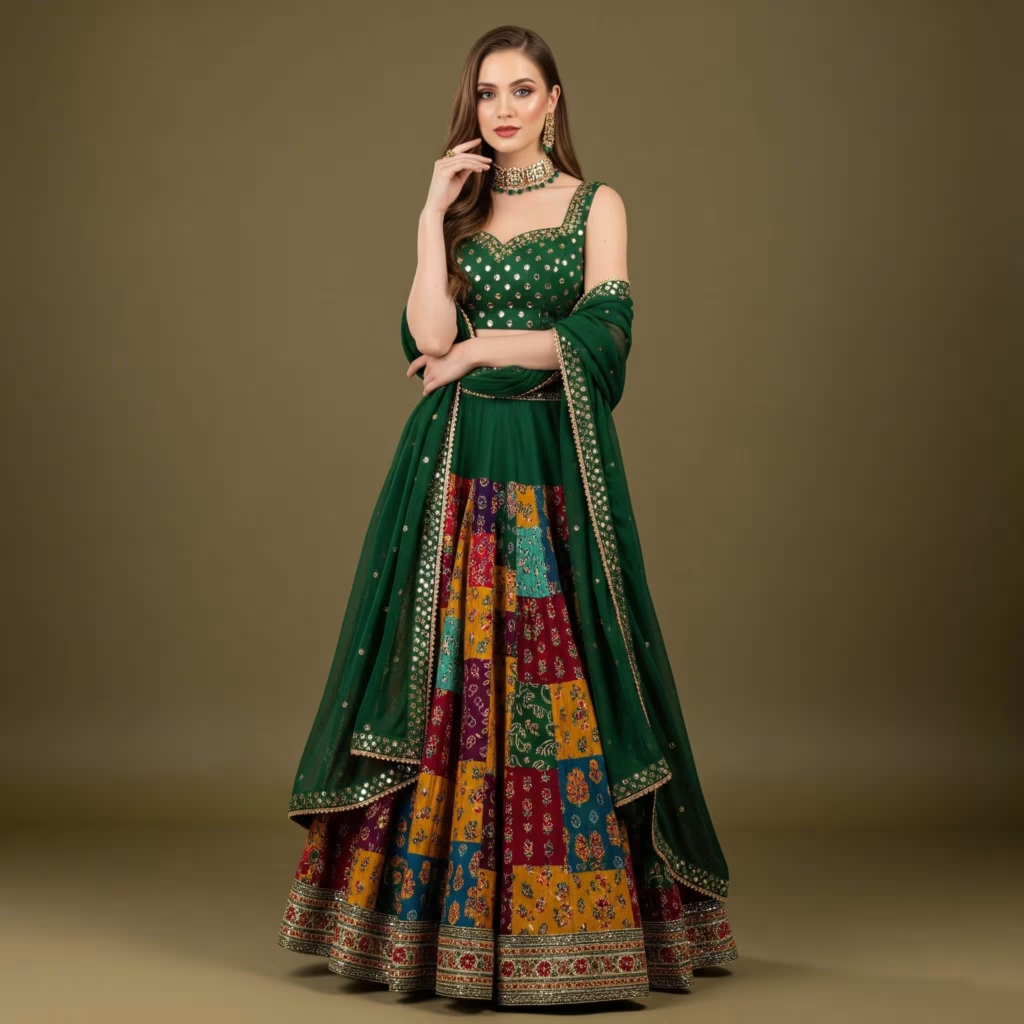
A bride named Anjali chose emerald green for her wedding in Udaipur. Her family was confused. Green was for muslim weddings, they said. Green was for something else, something less. Anjali held her ground.
“I’m a botanist,” she told me. “I spend my life studying things that grow. My marriage should grow too—slowly, steadily, beautifully. Green is the only colour that says that.”
She was right. Looking at her wedding photos, you don’t see a bride who compromised. You see a woman entirely at home in her own story.
Blue: The Colour of Depth and Mystery
Blue brides are the ones people remember but can’t quite explain. There’s something about them—a stillness, a depth, a sense that they contain multitudes.
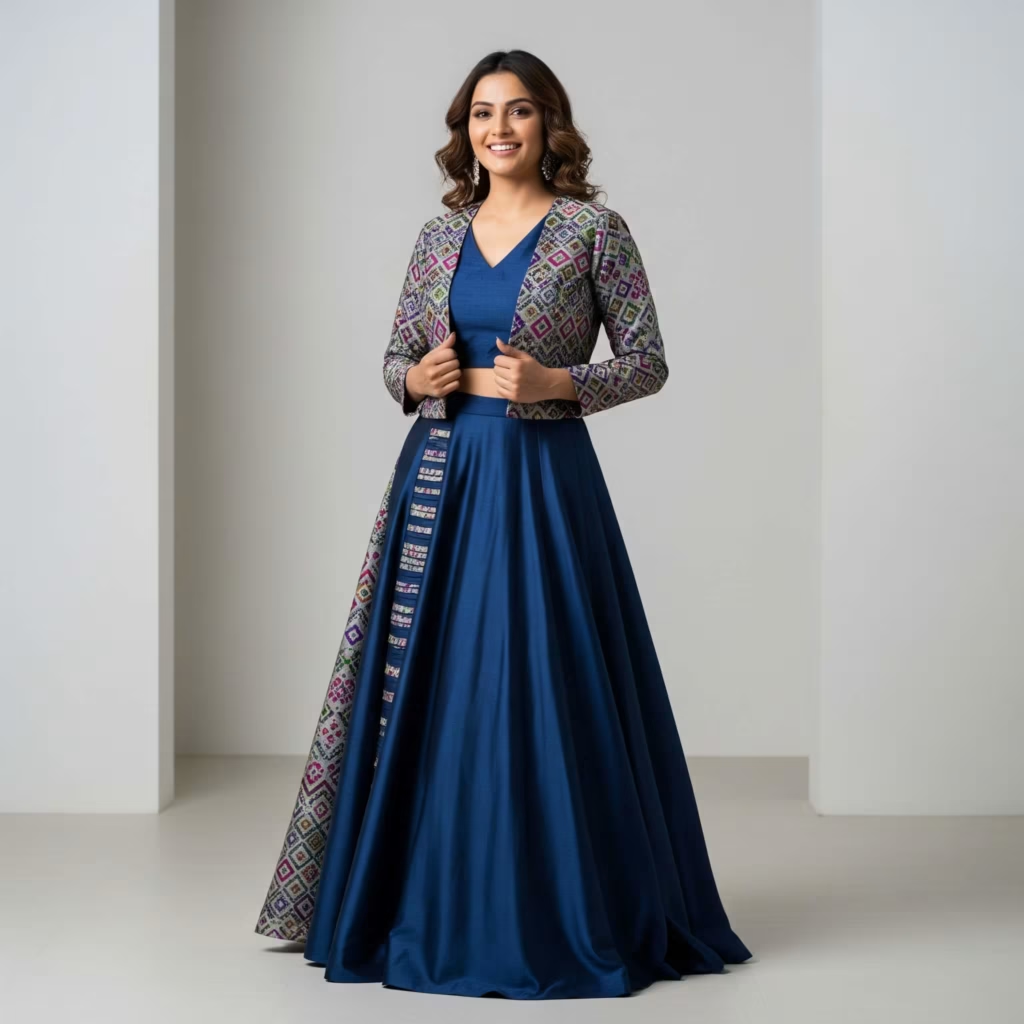
Blue is the colour of the infinite—the sky that never ends, the ocean that holds secrets. When a woman chooses blue for her wedding, she’s saying: I am more than what you see. My love is deeper than this one day. My story continues beyond this frame.
I photographed a bride in Kerala who wore a midnight blue lehenga with silver work, no gold at all. Her family had begged her to reconsider. She smiled, thanked them for their concern, and wore what she’d chosen.
The photos are extraordinary. Not because blue is more photogenic than red—it isn’t, necessarily—but because her comfort in her choice translated into something the camera could read. She glowed because she was herself, not because she was what someone else expected.
Gold and Ivory: The Colour of Quiet Confidence
Some women don’t want to announce themselves with colour. They want to be discovered.
Gold and ivory brides are the ones who understand that presence doesn’t require volume. They walk into rooms quietly and fill them anyway. Their beauty reveals itself slowly—first the overall impression, then the details, then the woman herself.
A bride in Delhi wore ivory and gold to her wedding—no red, no colour at all except what the flowers and jewellery provided. Her mother-in-law was visibly uncomfortable. Other guests whispered. But when the bride looked at her groom during the phera, something happened that silenced every whisper.
She was completely, utterly herself. Not performing bridehood. Just being.
The photos from that wedding are the ones people still talk about years later. Not because of the outfit, but because of the woman in it.
The Anti-Bride Movement Nobody’s Talking About
Something is shifting in how Indian women approach their wedding wardrobes. Quietly, without announcements or manifestos, women are choosing colours that reflect them rather than traditions that precede them.
I’ve seen lavender lehengas at Sikh weddings. Peach at Bengali weddings. Even a black lehenga—yes, black—at a reception in Bangalore, worn by a bride who said she’d spent her life afraid of dark colours and refused to be afraid on the most important day of her life.
This isn’t rebellion for rebellion’s sake. These women aren’t trying to make statements or challenge their families. They’re simply asking a question that previous generations weren’t allowed to ask: What do I want?
And they’re discovering that the answer isn’t always red.
How to Know If You’re Choosing the Right Colour
Here’s a simple test I give every bride who’s unsure about her colour choice.
Close your eyes. Picture yourself ten years from now, sitting with your partner on a quiet evening. You pull out your wedding album—the physical one, the one your children will fight over someday. You open it to the first page.
What colour do you hope to see?
Don’t think about what your mother will say. Don’t think about what’s trending on Instagram. Don’t think about what the store has in stock or what your future mother-in-law suggested.
What colour does your heart reach for?
If it’s red, wear red. Wear it fiercely, proudly, with the knowledge that you’re joining a lineage of women who chose the same colour for the same reason—because it spoke to them.
But if it’s something else, wear that. Wear it with the same fierceness. Because lineage isn’t just about repeating what came before. It’s about adding your verse to the song.
Here’s something practical that might help if you’re still uncertain: different colours photograph differently, and different light treats colours differently.
Red is forgiving. It reads clearly in dim light, holds its own against flash photography, and creates contrast that makes faces pop. This isn’t accidental—generations of bridal tradition were shaped partly by photography limitations that no longer exist.
But modern cameras handle colour differently. That dusty rose that would have looked beige in your mother’s wedding photos? It glows now. That powder blue that would have washed out? It etherealizes.
I watched a bride wear a sage green lehenga to an outdoor wedding in Goa. The sunset hit her at exactly the right moment, and the green turned golden. Her photographer captured it. That photo now hangs in her living room, and everyone who sees it asks about the colour.
She didn’t plan that moment. She couldn’t have. But she created the conditions for it by choosing something that spoke to her rather than something that was safe.
The Question That Changes Everything
When I was choosing my own wedding colours years ago, I remember standing in a boutique surrounded by silk and opinions.
There were relatives offering suggestions. Salespeople presenting “safe” options. Traditions whispering what a bride should look like.
And underneath all of it, there was my own quiet uncertainty.
The question that finally clarified everything wasn’t about trends or photographs or what would “look best.” It was simpler—and far more powerful.
Imagine a child you love someday flipping through your wedding album.
Maybe it’s your daughter. Maybe your son. Maybe a niece, or the child of your closest friend. They’re old enough now to understand what weddings mean. They pause at your picture and ask:
“Why did you choose that colour?”
What would you want to say?
“I chose it because it’s what my family has always worn.”
That answer carries heritage, memory, continuity. There is dignity in it.
“I chose it because that’s what everyone else was wearing.”
That answer feels thinner. Borrowed.
“I chose it because when I tried it on, I felt like myself.”
That answer teaches something lasting—that tradition and individuality don’t have to fight each other. That you can honor the past without disappearing inside it.
Children notice these things. Even if they don’t say it out loud.
The Bride Who Didn’t Choose Red
There was a bride I once met in Jaipur, standing between expectation and instinct.
In her hands was a soft dusty rose lehenga that made her face glow. Beside her, her mother gently but firmly pointed toward a more traditional red.
The red was beautiful. Rich. Approved.
The rose was quieter. Personal.
She didn’t make her decision that afternoon. She went home. She thought. She spoke to her fiancé. She looked at photographs of herself in both shades. She cried a little—because sometimes choosing yourself feels heavier than following a script.
Then she returned alone.
She chose the rose.
Months later, she sent me a candid from her wedding. She wasn’t posing. She was laughing—head tilted back, caught mid-moment. The rose fabric shimmered softly in the light.
She didn’t look like someone fulfilling an expectation.
She looked like herself—just stepping into a new chapter.
In her message she wrote, “My mother says it’s the most beautiful she’s ever seen me. I think she truly means it.”
That’s the thing about the right colour. It doesn’t compete with you. It reveals you.
What Wedding Colours Really Represent
Colour is rarely just aesthetic.
It carries memory. Culture. Family history. Hope. Identity.
But it should never feel like camouflage.
On your wedding day, you are not meant to disappear into a role. You are meant to be fully seen—as a daughter, a partner, a friend, and most importantly, as yourself.
The right shade won’t just flatter your skin tone. It will quiet the noise in your mind. It will make you stand taller. It will feel like an extension of your voice.
And when someone asks years later why you chose it, your answer will reflect more than fashion. It will reflect agency.
So tell me—have you chosen your wedding colours yet?
Or are you still holding onto a palette that belongs to someone else?
Sometimes the bravest choice isn’t the boldest colour. It’s the one that feels unmistakably yours.