
For nine nights every year, wardrobes across India change in a very specific way.
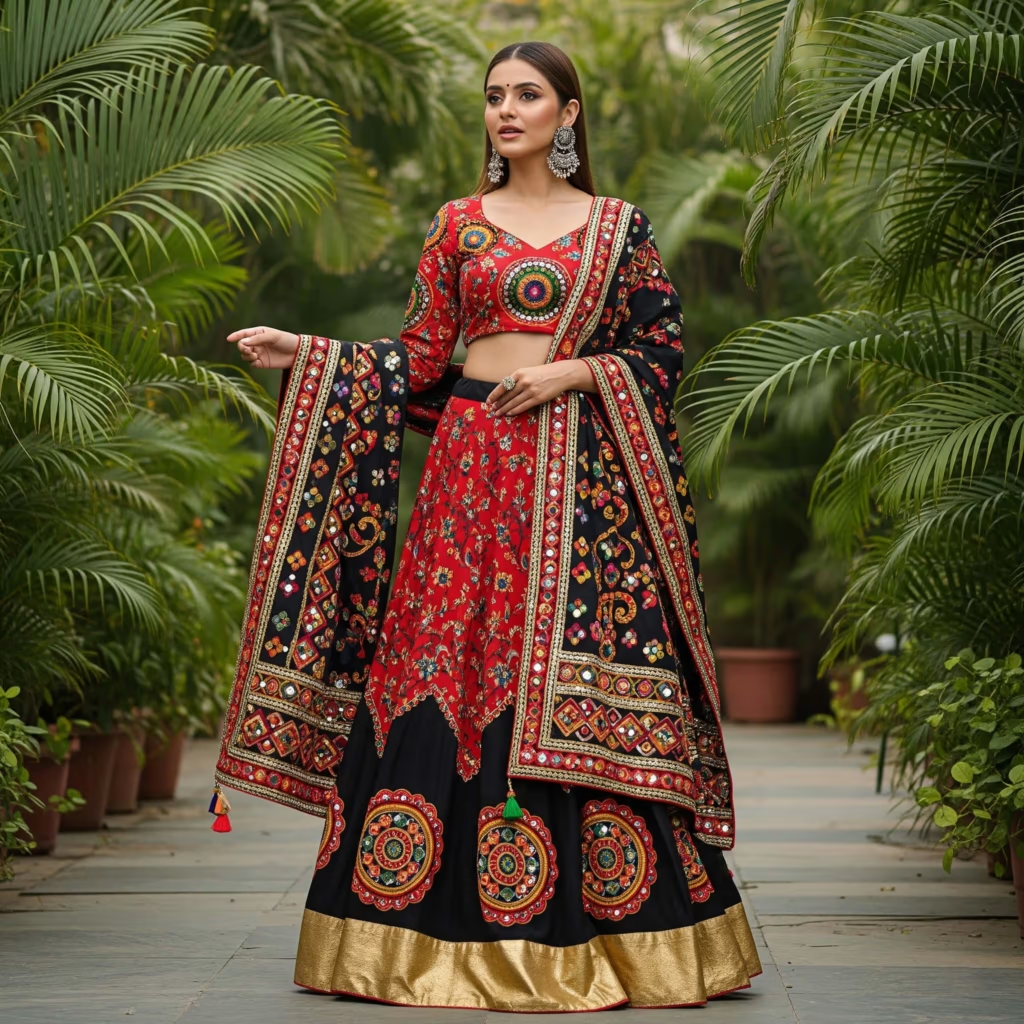
Out come the mirror work skirts. The vibrant cholis. The dupattas that seem to catch light from every direction.
Navratri is not just a festival—it’s a marathon of movement.
Unlike weddings, where outfits are designed mostly for photographs, Navratri clothing has a different job. It must survive hours of spinning, clapping, stepping, and turning in crowded dance circles.
That’s where the ghaghra comes in.
At first glance, a ghaghra looks simple: a long skirt with volume and color. But anyone who has tried dancing garba or dandiya for several hours knows that not every ghaghra behaves the same way.
Some swirl beautifully.
Some twist around your legs.
Some feel light and joyful.
Others feel like you are dragging fabric behind you.
The difference is not just fabric or decoration.
The difference is geometry.
Let’s explore how the shape, weight, and construction of a ghaghra can determine whether you glide through nine nights of dancing—or spend the evening adjusting your outfit.
Why Movement Changes Everything
Fashion often focuses on how clothing looks while standing still.
But ghaghras are meant to move.
Garba and dandiya include constant circular motion. When you spin, the skirt expands outward. When you step back, the fabric collapses inward. When you clap and turn, the ghaghra must follow your body rhythm.
If the skirt is too heavy, it slows you down.
If the flare is too small, it restricts your steps.
If the waistband is unstable, the entire structure shifts while you dance.
So the real question when choosing a ghaghra is not simply “Is it pretty?”
The real question is: Does it move well?
The Flare Formula
One of the most important elements in ghaghra design is the flare.
Flare refers to how wide the skirt becomes when it spreads out.
Designers measure this using something called the hem circumference—the distance around the bottom edge of the skirt.
A typical ghaghra may have a flare of 4 to 6 meters.
But for dancing, the sweet spot is often between 5 and 7 meters.
Why?
Because this range creates enough movement to look dramatic while still being manageable during fast steps.
Too little flare and the skirt barely moves.
Too much flare and the fabric becomes difficult to control.
Think of it like a spinning top. The right amount of spread allows smooth rotation.
Panel Construction: The Hidden Structure
Many ghaghras are made using panels.
Panels are triangular fabric pieces stitched together to create volume.
A skirt with 8 panels will behave differently from one with 24 panels.
More panels usually mean smoother movement because the fabric distributes weight more evenly.
Imagine a circle made of straight lines. The more lines you add, the smoother the circle becomes.
Similarly, a ghaghra with 20 or more panels creates graceful folds instead of bulky bunching.
This also helps the skirt fall naturally after each spin.
Fabric Weight Matters More Than You Think
Heavy embroidery can make a ghaghra look luxurious, but weight can affect comfort during long dance sessions.
A skirt that looks beautiful on a hanger might feel exhausting after two hours of movement.
Lightweight fabrics such as cotton blends, georgette, or soft silk allow the skirt to breathe and move freely.
Heavily layered fabrics, on the other hand, may trap heat and restrict motion.
The ideal Navratri ghaghra often balances decoration with practicality.
Mirror work, thread embroidery, and printed patterns can create visual impact without excessive weight.
The Waistband Test
Many wardrobe malfunctions begin at the waistband.
If the waistband is too loose, the ghaghra shifts while you dance.
If it is too tight, it becomes uncomfortable during long evenings.
A well-designed ghaghra uses a wide waistband that distributes weight evenly.
Some also include adjustable drawstrings or hooks for extra support.
Before buying or stitching a ghaghra, try a simple test.
Hold the skirt at the waist and spin gently.
If the waistband feels stable and secure, the structure is likely strong enough for dancing.
Length: The Dance-Friendly Rule
Length is another detail that can transform the experience of wearing a ghaghra.
A skirt that is too long may get caught under your feet during quick steps.
A skirt that is too short may lose the graceful flow that makes ghaghras special.
The ideal length usually falls just above the ankle.
This allows the fabric to move freely while keeping your steps visible and safe.
Footwear also matters. If you plan to wear heels or platform sandals, measure the ghaghra accordingly.
Colour Psychology on the Dance Floor
Navratri is famous for its vibrant colors.
Each night often celebrates a different shade, and many dancers enjoy matching their outfits to the traditional color of the day.
But color is not just about tradition—it also affects how movement appears.
Bright shades such as yellow, orange, and red reflect light beautifully when the skirt spins.
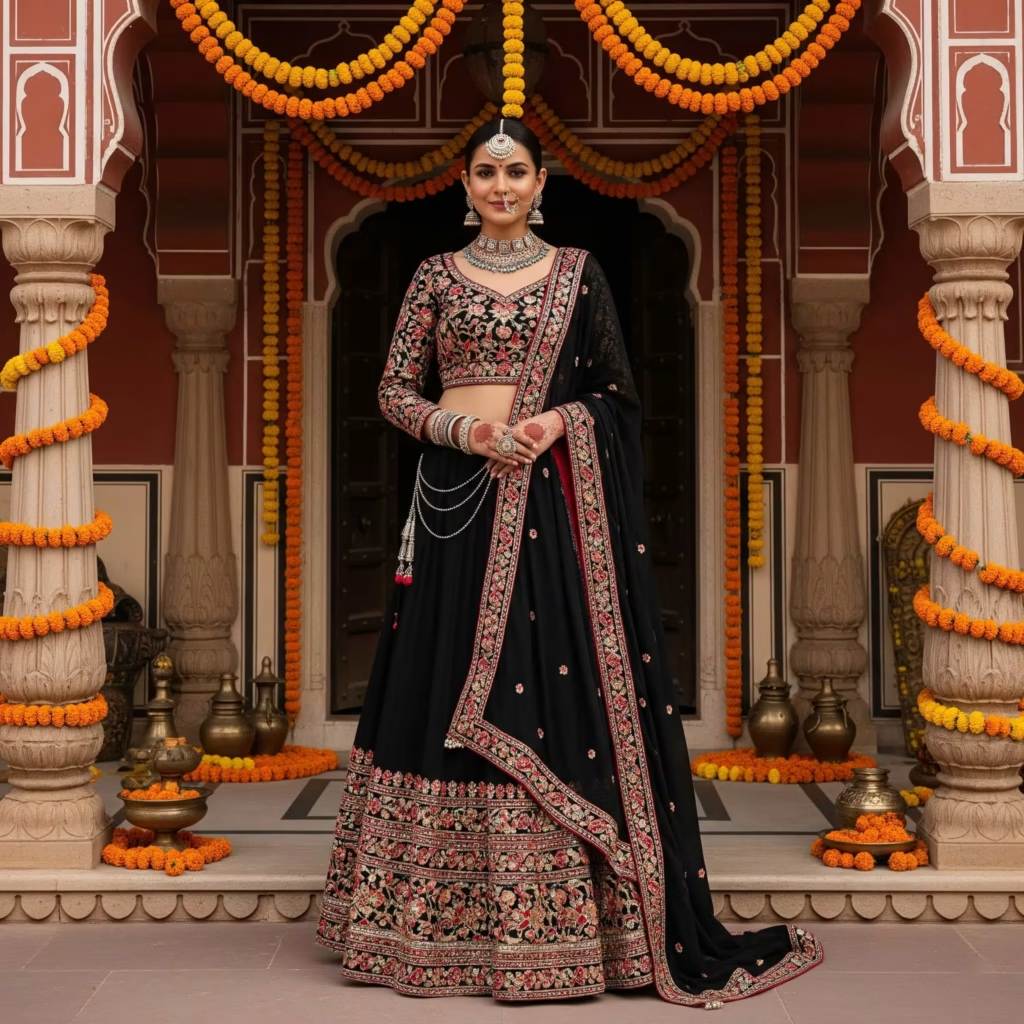
Darker shades such as navy or deep green create a more dramatic look under evening lights.
Multi-colored ghaghras are particularly popular because they create shifting patterns during turns.
When the skirt moves, the colors blend and separate like a kaleidoscope.
Dupatta Strategy
While the ghaghra receives most of the attention, the dupatta can influence comfort as well.
Some dancers prefer a lightweight dupatta pinned securely to the choli.
Others choose to drape it diagonally across the torso.
The goal is to ensure the dupatta stays in place without restricting arm movement.
Because garba and dandiya involve clapping and circular arm motions, a loose dupatta can become distracting.
A simple pin at the shoulder and waist often solves the problem.
Choli Balance
The choli, or blouse, must balance the volume of the ghaghra.
Since the skirt already provides drama, many dancers choose fitted cholis that allow free movement.
Sleeveless or short-sleeve designs are popular because they make clapping and spinning easier.
However, comfort is personal. Some prefer elbow-length sleeves for a traditional look.
The key is ensuring the blouse stays secure during energetic movement.
Footwear: The Silent Hero
Many people focus only on clothing, but footwear plays a crucial role in dance comfort.
Traditional mojris or juttis provide a flat, stable base for stepping and turning.
Soft soles help absorb impact during long sessions.
Shoes with slippery soles may cause difficulty on polished dance floors.
If possible, test your footwear before the event by practicing a few steps at home.
Your feet will thank you later.
The Story of Meera’s Nine Nights
A few years ago, a woman named Meera attended Navratri celebrations in Ahmedabad for the first time.
She had purchased a stunning ghaghra—heavy embroidery, bright colors, and intricate mirror work.
It looked breathtaking in photographs.
But by the third garba round, she felt exhausted. The skirt was heavy, the waistband shifted constantly, and the fabric tangled around her legs.
The next evening, she chose a simpler ghaghra—lighter fabric, slightly less embroidery, and a better waistband.
The difference was remarkable.
She danced for hours without thinking about the skirt at all.
Later she said something interesting:
“The first ghaghra made me look beautiful. The second one made me feel free.”
And that freedom allowed her to enjoy the festival fully.
The Secret of Effortless Style
True style rarely comes from excess.
It comes from balance.
A ghaghra designed with thoughtful proportions allows movement, comfort, and beauty to exist together.
When the geometry is right, the skirt responds naturally to every spin and step.
Instead of adjusting your outfit constantly, you simply dance.
And that is the real purpose of Navratri fashion—not just to look festive, but to celebrate joy through movement.
Your Nine-Night Checklist
Before the festival begins, consider preparing a small wardrobe plan.
Choose ghaghras that balance color, comfort, and structure.
Make sure each outfit allows freedom of movement.
And remember that the most memorable moments rarely come from perfect outfits.
They come from laughter with friends, music echoing through the night, and the feeling of spinning beneath bright lights with a skirt that moves exactly the way it should.
Because when clothing supports the moment instead of controlling it, style becomes effortless.
And nine nights of dancing suddenly feel far too short.
Navratri is a celebration of rhythm, color, and community. When your ghaghra works with your body instead of against it, every step feels lighter, every turn feels joyful, and every night becomes a memory worth keeping.
Select with care, dance without a worry, and watch as the mathematical design brings the dance to life.