An intelligent guide you can actually take to your tailor
There is a quiet moment most saree wearers know well.
You’ve chosen the saree. The fabric feels right. The colour makes you glow. The border is perfect.
And then comes the blouse.
Someone at the boutique casually says, “Just make a boat neck. It suits everyone.”
So you nod.
But when the blouse arrives, something feels slightly off.
The saree still looks beautiful—but you don’t feel as balanced as you imagined.
This happens because blouse necklines are rarely treated as design decisions. They’re treated like defaults.
But necklines are not decoration. They are architecture.
The shape of a neckline affects how wide your shoulders appear, how your bust is framed, how long your neck looks, and even how confident you feel while wearing the saree.
Tailors often repeat a few common patterns because they are easy to stitch. Fashion advice online often suggests the same three or four necklines.
But real bodies are far more varied.
Different shoulder slopes, collarbone widths, bust shapes, and back structures all respond differently to neckline geometry.
When the right neckline meets your body structure, the result isn’t just flattering—it feels effortless.
Let’s look at seven necklines that consistently work across body types when matched correctly. Think of this as a blueprint you can carry to your tailor.
1. The Gentle Scoop: The Universal Balancer
If one neckline quietly works for almost everyone, it is the gentle scoop.
The curve sits below the collarbone but doesn’t dip dramatically. It creates an open shape that softens the upper body without revealing too much.
Why does this work so well?
Because curves create balance. The soft arc distributes visual attention evenly across the shoulders and bust.
Best For
Medium to full busts
Narrow or average shoulders
Women who prefer elegant simplicity
Why It Works
A scoop neckline naturally lengthens the neck area and creates visual breathing space between the saree and the face.
It also avoids the stiffness that sometimes comes with high necklines.
Tailor Tip
Ask for a moderate scoop depth—about two to three inches below the collarbone. Too deep and it becomes revealing; too shallow and it loses its effect.
This neckline is ideal for everyday elegance and festive sarees alike.
2. The Structured Square: For Balanced Proportions
The square neckline is quietly powerful.
Unlike curved necklines, it uses straight lines and right angles. This creates structure around the bust and shoulders.
For women with fuller busts, this shape prevents the fabric from collapsing inward.
For women with smaller busts, it creates visual definition.
Best For
Medium to full bust
Rounder shoulder lines
Women who want a polished look
Why It Works
Straight lines provide clarity. They frame the bust like a window frame—clean, stable, and balanced.
Square necklines also highlight the collarbone beautifully.
Tailor Tip
Ensure the square is not too wide. If the corners extend beyond the shoulder line, the blouse can appear oversized.
When stitched well, this neckline pairs beautifully with silk sarees and heavier fabrics.
3. The Soft V: The Vertical Illusion
The V-neckline is one of the most powerful tools in blouse design.
Why? Because it creates vertical movement.
Vertical lines visually elongate the torso, making the upper body appear longer and more balanced.
Best For
Full bust
Shorter neck
Petite body frames
Why It Works
The downward angle draws the eye toward the centre of the body, which reduces the visual width of the chest area.
It also creates a naturally elegant drape for the saree pallu.
Tailor Tip
A medium V works best. Very deep V shapes can feel dramatic, while extremely shallow ones lose the slimming effect.
Adding a thin border or piping along the V edge makes the design look intentional and refined.
4. The Boat Neck: Elegant but Strategic
The boat neck is widely loved, but it must be used thoughtfully.
It runs horizontally from shoulder to shoulder, creating a broad visual line.
This can look incredibly graceful when matched to the right body structure.
Best For
Narrow shoulders
Smaller bust
Long neck
Why It Works
The horizontal line widens the upper body slightly, creating balance for those with slender frames.
It also highlights the collarbone beautifully.
When to Avoid
If someone already has broad shoulders or a heavy bust, a boat neck can make the upper body appear wider.
Tailor Tip
Keep the back neckline deeper than the front. This creates balance and prevents the blouse from feeling stiff.
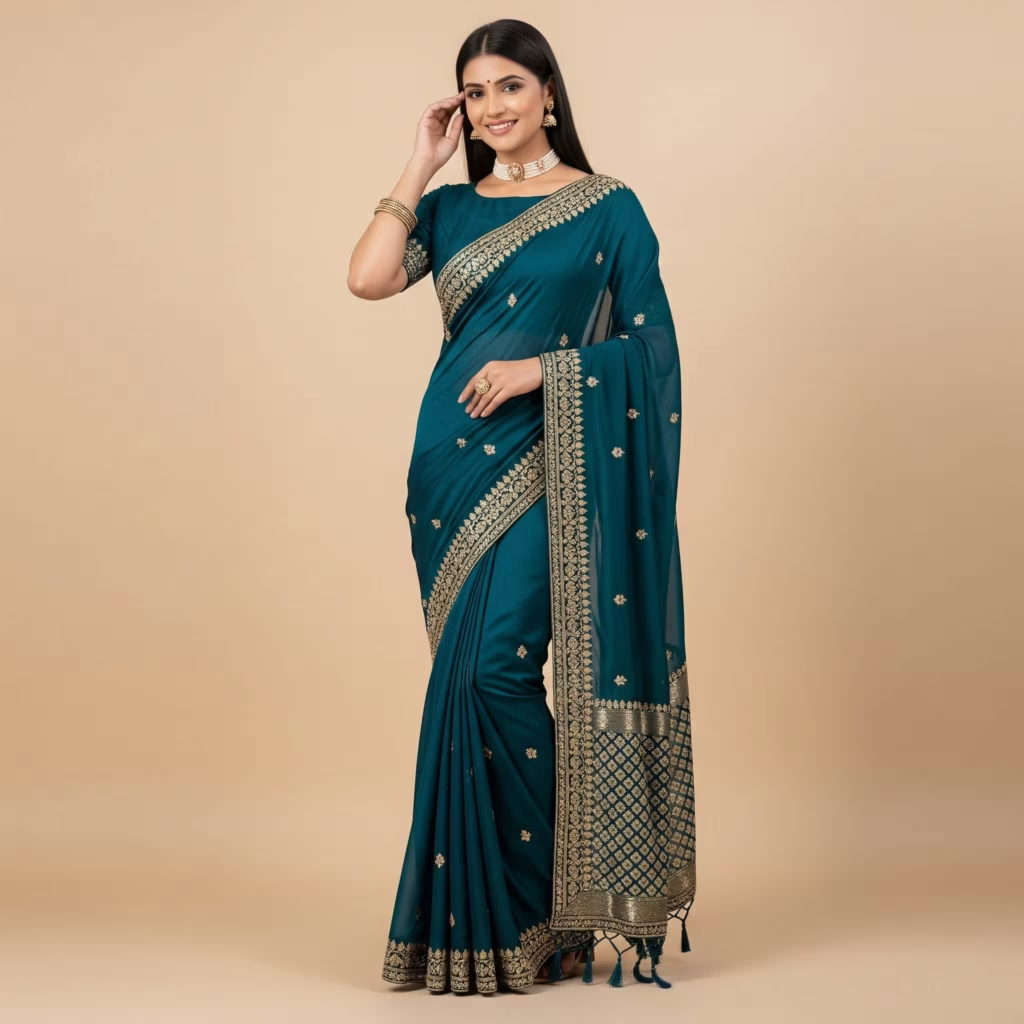
5. The Classic U-Back: Quiet Drama
Sometimes the most flattering design happens at the back.
The U-back neckline is timeless because it adds elegance without overwhelming the front of the blouse.
It also allows saree borders to sit beautifully along the shoulder.
Best For
Women who prefer modest front necklines
Medium to broad shoulders
Festive and wedding blouses
Why It Works
The curved shape frames the back while keeping the structure soft and feminine.
It also creates space for subtle details like tie strings, tassels, or embroidered borders.
Tailor Tip
Ask your tailor to keep the curve smooth and symmetrical. Uneven U shapes can distort the entire look.
6. The Angled Sweetheart: Soft Yet Defined
The sweetheart neckline is common in modern blouse designs, but the angled version is more practical for sarees.
Instead of a deep heart shape, this neckline uses gentle curves that meet at a soft point.
Best For
Medium bust
Curvier body shapes
Evening or reception wear
Why It Works
The curved lines complement natural body contours while the slight centre point adds definition.
This creates an elegant balance between structure and softness.
Tailor Tip
Avoid making the curve too dramatic. A subtle sweetheart works far better with sarees than a deep one.
7. The Collarbone Frame: Minimal and Sophisticated
Some of the most elegant blouses today use what designers call a collarbone frame neckline.
This is a shallow curved neckline that sits just below the collarbone.
It looks simple—but its effect is surprisingly powerful.
Best For
Long neck
Slim shoulders
Minimalist styling
Why It Works
The neckline draws attention to the collarbone, one of the most naturally graceful parts of the body.
It also allows statement jewellery to stand out beautifully.
Tailor Tip
This neckline works best with structured fabrics like silk or brocade so it keeps its shape.
Understanding Shoulder Slopes
One often ignored factor in blouse design is shoulder slope.
Some shoulders are straight and horizontal. Others slope downward gently.
Necklines interact differently with each structure.
For example:
Boat necks suit sloped shoulders well because they create visual balance.
Square necklines suit straighter shoulders because they maintain structure.
V necklines work with almost any shoulder shape because they create vertical movement.
A good tailor will adjust neckline width slightly depending on shoulder angle.
Bust Shape Matters More Than Size
Many blouse suggestions are based on bust size alone. But shape is equally important.
Two women with the same measurement may have completely different silhouettes.
For fuller busts, structured necklines like square or V shapes provide support.
For smaller busts, wider necklines like boat or collarbone frame styles can add balance.
The goal is not to hide or emphasize. It is to create harmony.
The Back Neckline Rule
One simple trick designers use is this:
The back neckline is often slightly deeper than the front.
This prevents the blouse from feeling restrictive and allows the saree pallu to sit comfortably.
Back designs also provide an opportunity for subtle creativity—tie strings, embroidery, or contrast piping.
But simplicity often ages better than complicated patterns.
The Tailor Conversation
When visiting a tailor, most people simply say:
“Make something nice.”
But a better approach is to discuss three things clearly:
Neckline shape
Neckline depth
Sleeve length
Bringing reference images can help, but understanding the geometry behind the neckline helps even more.
Tailors appreciate clients who know what they want.
A Final Thought
The perfect blouse is rarely the most dramatic one.
It is the one that quietly aligns with your natural proportions.
When that happens, something interesting occurs.
You stop adjusting your saree constantly.
You stop thinking about whether the blouse looks right.
You simply move, talk, laugh, and enjoy the moment.
Good design disappears when it works well.
And perhaps that is the real goal—not to follow trends, but to create pieces that feel effortlessly yours.
Because when a blouse fits your body and your personality, it doesn’t just support the saree.
It supports you.
And that is the blueprint worth keeping.