
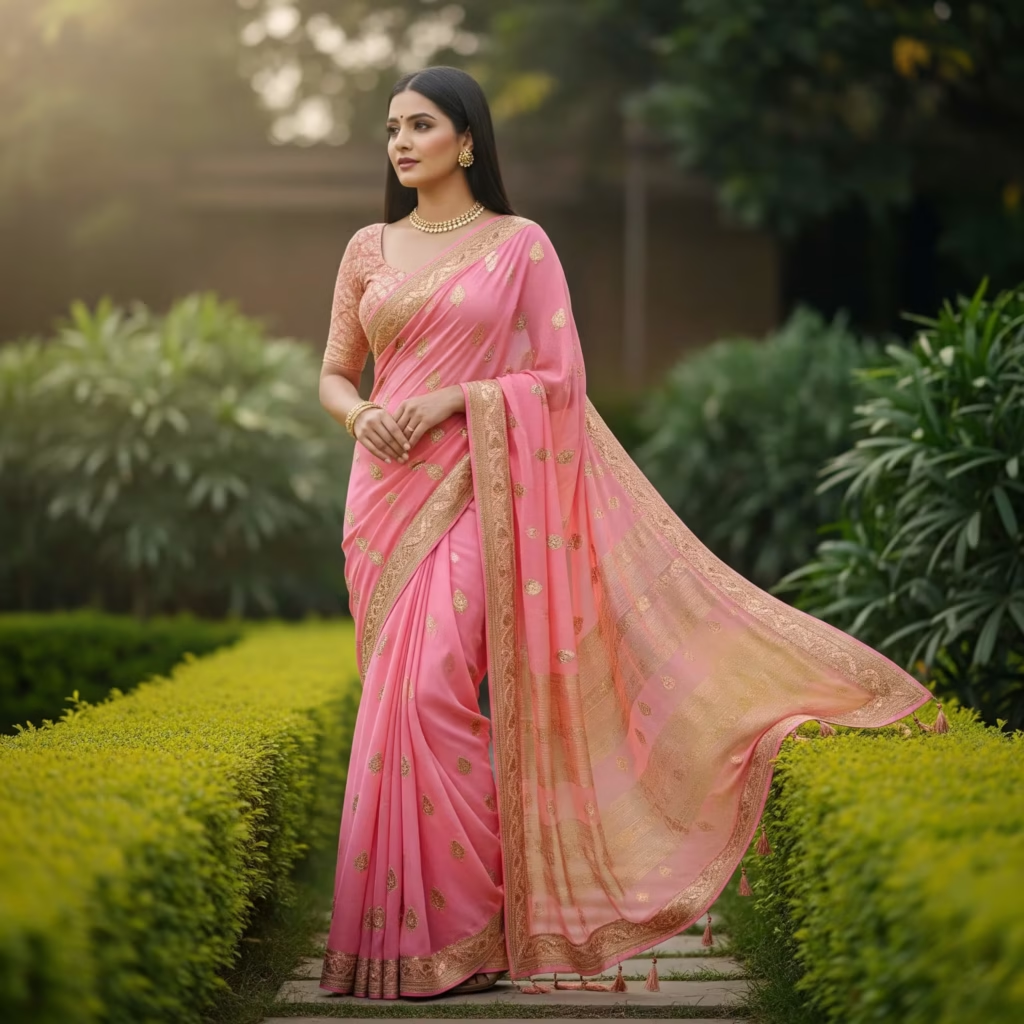
You know that feeling.
The delivery message arrives. You’ve been tracking the parcel for days. You chose this saree carefully—zoomed into every image, read every line of description, imagined exactly how it would fall when you walk.
You open the package with anticipation.
The colour? Perfect.
The design? Exactly what you saw online.
But the fabric?
Something feels… off.
It’s heavier than you expected. Or thinner. Or strangely stiff. Or too clingy. It doesn’t drape the way it did on the model. It doesn’t move the way you imagined. You try wrapping it around yourself anyway, hoping it will somehow transform.
It doesn’t.
You fold it back up, disappointed—not because it’s ugly, but because it’s wrong for you.
Here’s the truth: most saree disappointments aren’t about colour or print.
They’re about fabric.
And fabric speaks a language most of us were never taught to understand.
Every Saree Has a Personality
Before you buy a saree, you need to stop asking, “Is this beautiful?” and start asking, “How does this behave?”
Fabric is not passive. It has structure, weight, memory, movement. It reacts to your body. It responds to light. It either works with you—or quietly fights you all evening.
Think of fabric like a personality.
Some sarees are bold and structured. Some are soft and romantic. Some are relaxed and grounded. Some are dramatic and attention-seeking.
Once you understand these personalities, shopping becomes less guessing and more decoding.
Let’s break them down.
1. The Architect (Structured & Commanding)
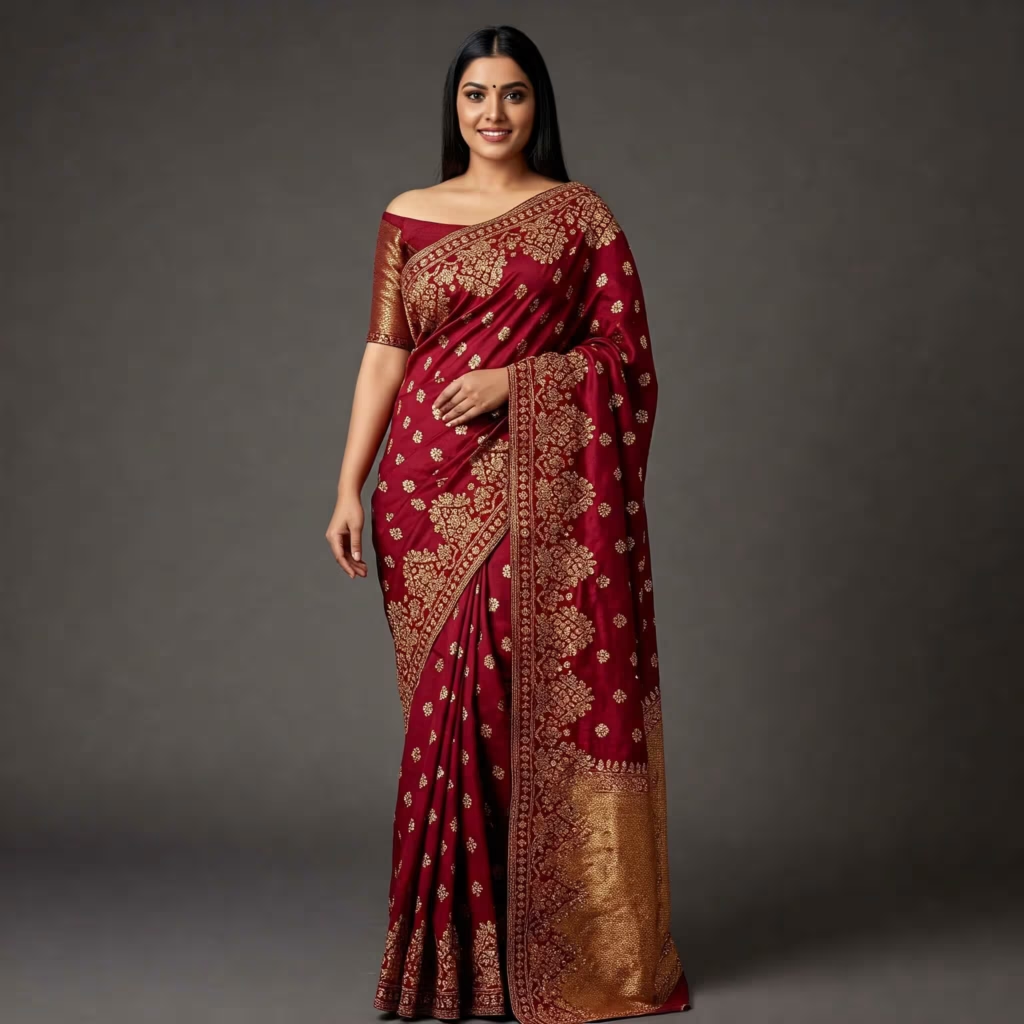
These are your heavier silks—Kanjeevaram, Banarasi, Gadwal, and dense brocades.
The Architect doesn’t flow. It holds shape.
When you create pleats, they stay crisp. The border remains visible and defined. The pallu doesn’t collapse into softness—it stands with authority.
This fabric gives you presence. It creates a silhouette. It makes you look composed and ceremonial.
But here’s the catch: it won’t adapt to you. You must adapt to it.
How to Recognize It in Photos:
Sharp pleats with clear edges
Fabric that looks substantial and slightly firm
Minimal rippling
Deep shadows between folds
Best For:
Weddings
Traditional ceremonies
Formal occasions
Events where you’ll be photographed often
This fabric doesn’t whisper. It announces.
2. The Flowing Companion (Light & Graceful)
Think lightweight silks, Chanderi, Maheshwari, Tussar blends.
This saree moves when you move. It creates soft ripples as you walk. It feels breathable and natural.
Unlike the Architect, this fabric works with your body rather than shaping it.
How to Spot It:
Gentle curves at the hem
Softly defined pleats
A sense of motion even in still photos
Light reflection that changes across folds
Best For:
Day weddings
Dinner gatherings
Festive events
Occasions involving movement
If you want elegance without feeling restricted, this is your fabric.
3. The Earth Soul (Textured & Honest)
Cotton. Linen. Khadi. Handloom weaves with visible texture.
These sarees don’t pretend to be dramatic. They feel real. They breathe. They crease. And that’s part of their charm.
They soften over time and feel better with every wear.
How to Identify:
Visible weave patterns
Slight natural wrinkles
Matte finish
Diffused, soft light absorption
Best For:
Daytime functions
Office wear
Cultural events
Casual celebrations
This fabric doesn’t demand attention—it earns it quietly.
4. The Shape-Shifter (Fluid & Unpredictable)
Crepe, georgette, satin blends, jersey fabrics.
These sarees can either cling beautifully or slide unpredictably.
They are adaptable—but they require understanding.
Look For:
Smooth surface with subtle shine
Fabric that drapes closely to the body
Minimal stiffness
Edges that appear soft and flexible
Some will hug your curves. Others will flow freely. The only way to know? Watch how it falls around the model’s waist in photos.
Best For:
Cocktail events
Contemporary functions
Destination weddings
Evenings with modern styling
This is the saree that changes personality based on how you style it.
5. The Ethereal Minimalist (Sheer & Striking)
Organza. Tissue. Net. Light transparent fabrics.
These sarees are visually dramatic but physically light. They don’t hide anything—every pleat and lining choice shows.
They require precision.
How to Recognize:
Translucent layers visible in photos
Sharp but airy pleats
Light passing through the fabric
Best For:
Evening receptions
Engagement parties
Formal celebrations with statement jewellery
These sarees are breathtaking when styled correctly—but they demand confidence.
The Three Tests That Never Fail
Even when shopping online, you can “read” a saree if you know what to look for.
1. The Fold Test (From Photos)
Find an image where the saree is folded or draped.
Ask yourself:
Are the folds sharp or rounded?
Do they create deep shadows or soft curves?
Does the fabric look heavy or airy at the bend?
Sharp angles mean structure. Soft curves mean flow.
That single observation tells you more than the entire description.
2. The Light Test
Zoom into the highlights.
If the light reflection is bold and glossy, you’re likely looking at silk or satin.
If it appears muted and warm, you’re probably looking at cotton or textured weave.
Strong contrast = heavier fabric.
Soft glow = breathable fabric.
Light never lies.
3. The Hang Test (Model Observation)
Look at how the saree hangs from the model’s shoulder.
Does it drop straight down with weight? That’s structured.
Does it float slightly away from the body? That’s lighter.
Does it cling at the waist? That’s fluid.
Ignore the pose. Watch the fabric.
Why Expectations Go Wrong
Most online shopping disappointments happen because we fall in love with styling—not fabric.
Professional photos include:
Perfect pleating
Invisible pins
Carefully chosen blouses
Controlled lighting
Sometimes even hidden support layers
You’re not buying the styling.
You’re buying the textile.
And textiles behave according to physics—not imagination.
Matching Fabric to Occasion
This is where most mistakes happen.
A heavy silk worn to a high-energy party will feel restrictive.
A lightweight chiffon worn to a traditional ritual may feel underwhelming.
A transparent organza at a daytime event may look too delicate.
The right saree isn’t just about what looks good.
It’s about context.
Ask:
Will I be sitting or moving?
Is this indoor or outdoor?
Is the focus on tradition or celebration?
Will I be photographed in natural or artificial light?
Fabric must match environment.
A Realisation That Changes Everything
A woman once told me she bought an expensive silk saree expecting it to flow effortlessly at a family dinner.
Instead, it felt stiff. She felt uncomfortable. She blamed her body.
But the issue wasn’t her body.
It was mismatch.
That saree was designed for ceremony, not casual conversation.
When she wore it later to a formal festival event, it transformed. It felt powerful. Appropriate. Right.
Same saree.
Different setting.
Different experience.
Fabric must meet the right moment.
The Smart Shopper’s Checklist
Before clicking “Buy Now,” take 60 seconds and check:
What is the exact fabric composition?
Does the product description mention weight?
Are there close-up images of texture?
Does the saree look structured or flowing?
Is this suitable for my event type?
Never rely only on adjectives like “luxurious,” “elegant,” or “premium.”
Look for concrete details.
The Final Truth
Fabric is honest.
It shows you exactly what it will do. It doesn’t trick you. It doesn’t change personality after delivery.
We just don’t always notice the signs.
The next time you scroll through sarees online, pause.
Don’t look at colour first.
Don’t imagine compliments.
Don’t picture the event.
Zoom into the fold.
Study the light.
Observe the drape.
Let the fabric introduce itself.
When you learn to read a saree’s body language, you stop collecting disappointments—and start choosing pieces that feel made for you.
Because the magic isn’t in finding the most expensive saree.
It’s in finding the one that understands you.
And now?
You know how to listen.
Have you ever bought a saree that looked perfect online but felt completely different in real life? Tell me what happened. Your story might help someone else avoid the same mistake.
Let’s decode fabric together.