
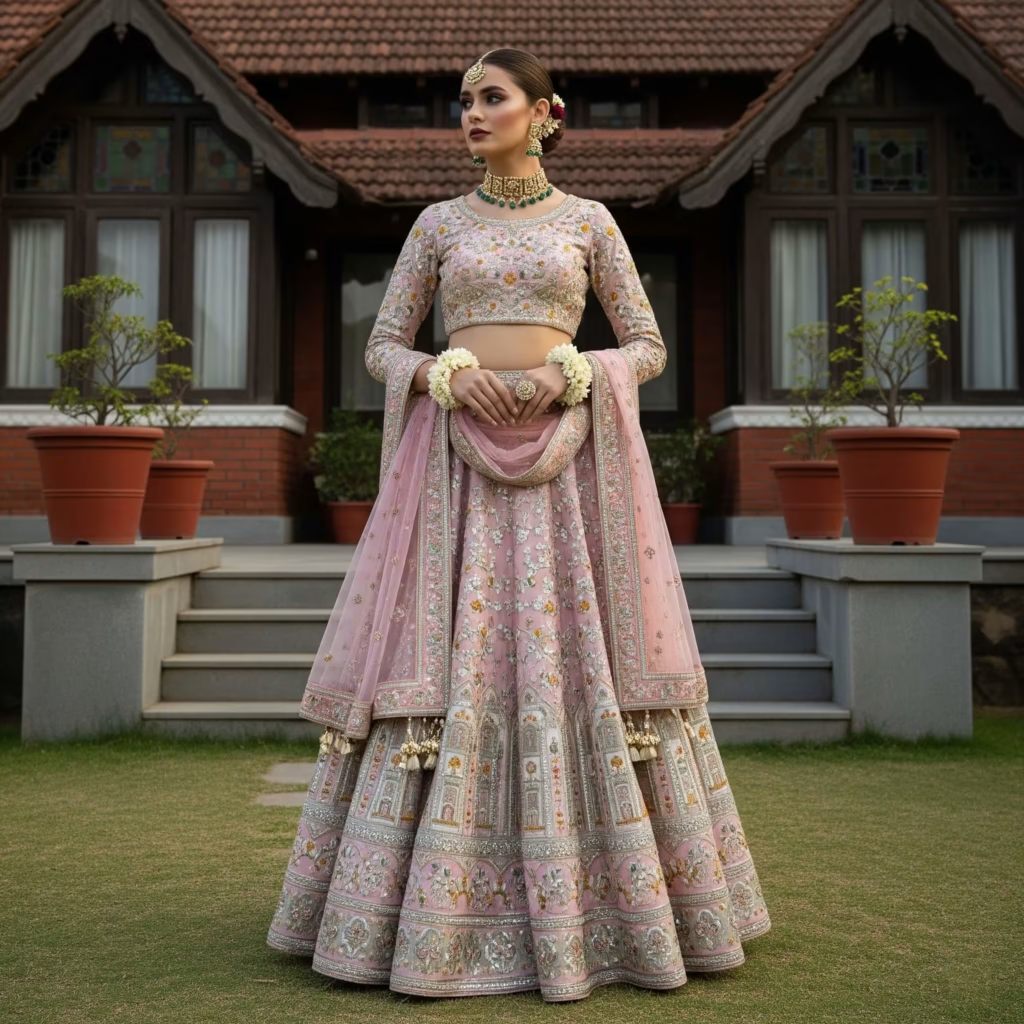
The parcel shows up on an ordinary weekday, but it doesn’t feel ordinary at all.
Inside is your mother’s wedding lehenga—wrapped in tissue, folded with care, sent across cities because your wedding is approaching and she wants you to at least think about wearing it.
You open the box slowly.
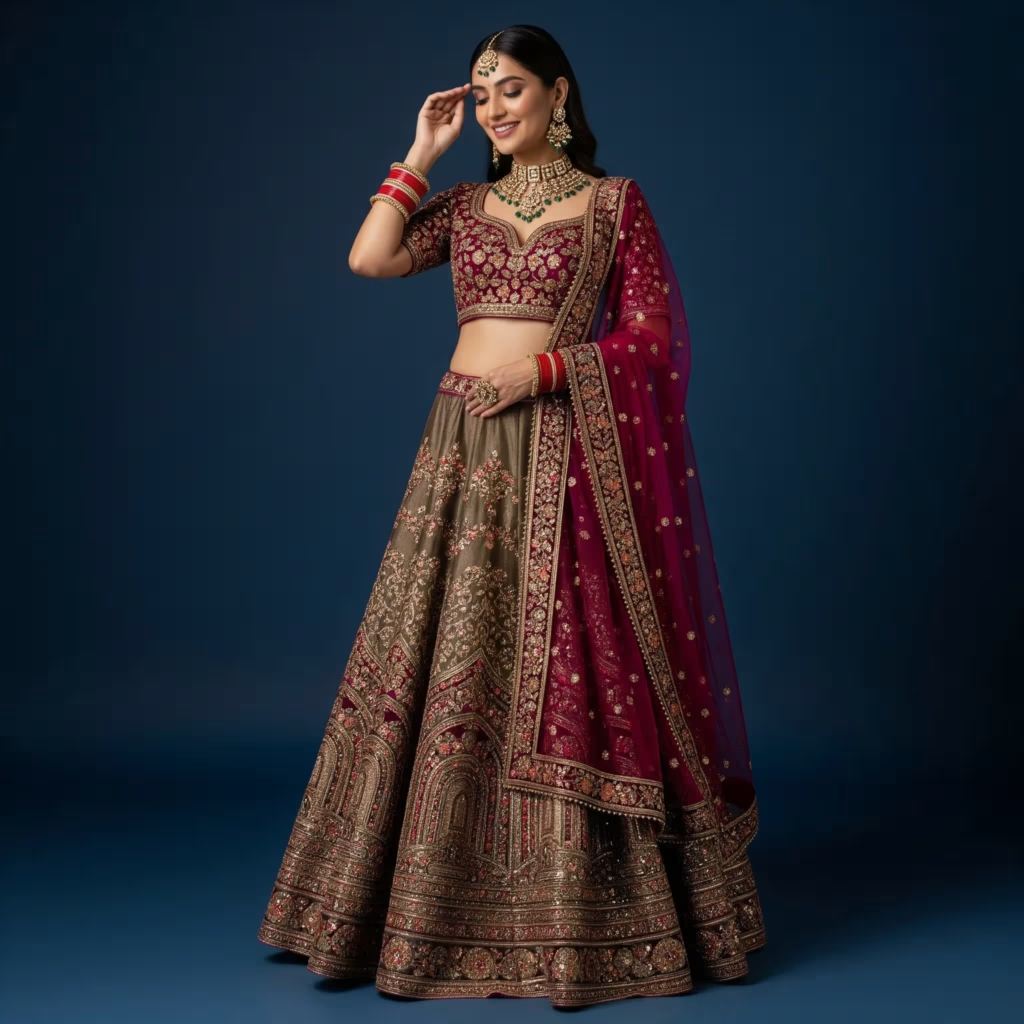
There’s that familiar scent—old silk, stored memories, time itself. Then the colour reveals itself: a deep maroon, rich gold zari, dense embroidery that speaks of craftsmanship from another decade. It’s stunning. It’s meaningful.
And it’s unmistakably from a different era.
The blouse sleeves are longer than you’d choose. The dupatta border is heavier than your taste allows. The skirt flares dramatically, built for a style of celebration that feels larger and more formal than what you imagine for yourself.
You love what it represents.
You’re just not sure you love it on you.
And that tension—that quiet pull between sentiment and self-expression—can feel impossible to resolve.
But here’s the truth: the real gift isn’t the lehenga.
It’s the intention folded inside it.
The Memory Isn’t in the Stitching
When mothers pass down their bridal outfits, they’re not handing over fabric. They’re handing over a moment in their life—who they were, what they dreamed, how they stepped into marriage.
That history deserves respect.
But respect doesn’t require replication.
You can honour what came before you without disappearing into it. And you can do it without cutting, trimming, or permanently changing the original garment.
Think of modernising an heirloom not as alteration—but as interpretation.
1. Rethink the Dupatta First
Often, the dupatta dates a lehenga more than anything else. Heavy borders, specific lace styles, or draping traditions can anchor the entire outfit in a particular decade.
The good news? The dupatta is already separate.
You don’t have to modify it. You can simply set it aside.
Replace it with something lighter—organza, tissue silk, or a soft net. Choose a border that echoes the original tones without copying them exactly. If the lehenga is gold-heavy, perhaps try subtle silver. If the skirt is deep and rich, balance it with something airy.
The original dupatta remains untouched in its box, preserved. And your version feels intentional, not inherited.
When someone asks where the original is, you can honestly say you’re saving it—because you are.
2. Create a New Blouse, Keep the Old One Sacred
Blouses are where most irreversible decisions happen.
Necklines change. Sleeves get shortened. Fabric gets cut.
But once you alter the original blouse, it can’t return to what it was.
Instead, commission a new one.
Choose a fabric that complements the lehenga—perhaps a solid tone pulled from its embroidery or a textured silk that feels modern. Experiment with contemporary necklines, sleeve lengths, or back designs that suit your personal style.
The contrast between old and new creates balance. The antique lehenga grounds the look; the modern blouse updates it.
And the original blouse? It remains exactly as your mother wore it—untouched, intact, preserved.
3. Add a Layer, Change the Story
Sometimes the heirloom feels overwhelming because of its weight or volume.
Layering can transform perception without transforming fabric.
Consider a sheer jacket, cape, or long overlay in a contrasting material. Matte over shine. Light over heavy. Minimal over intricate.
A transparent ivory layer over a bold red lehenga can soften the intensity. A structured modern jacket can sharpen the silhouette.
The key is framing—not hiding.
Remove the layer later in the event and you reveal the original look beneath. One garment, two moods.
4. Modern Styling Is Powerful
You don’t always need structural changes. Styling alone can shift the entire energy.
Try unexpected jewellery. Instead of traditional gold, experiment with oxidised silver or contemporary statement pieces.
Choose a hairstyle that feels current rather than conventional. Soft waves instead of a tight bun. Minimal makeup instead of full bridal glam.
Even footwear changes posture, and posture changes presence.
The same heirloom that felt dated in storage can suddenly feel editorial when styled with intention.
5. Divide the Day
There is no rule that says you must wear one outfit for every moment.
Many brides now dedicate ceremonial time to tradition and celebratory time to ease.
Wear the heirloom during rituals—honouring lineage, family, memory. Then change into something lighter and more aligned with your personal aesthetic for the reception or dancing.
Both outfits get their moment.
And you get to fully inhabit both roles: daughter of tradition and woman of today.
A Conversation Across Generations
One bride I worked with was worried about disappointing her future family. She had inherited her mother-in-law’s lehenga, but their body types were entirely different. The proportions didn’t work, and she felt trapped between gratitude and discomfort.
When she finally spoke honestly, her mother-in-law surprised her.
“I wore that because it was my choice back then,” she said. “You deserve yours now.”
They collaborated.
The bride wore the skirt portion only, pairing it with a new blouse and lighter dupatta. The original blouse stayed folded away. Temporary hemming—completely reversible—adjusted the length for the day.
After the wedding, the lehenga returned to its original state.
What remained altered was not the garment—but their relationship. It grew stronger through honesty.
The Question to Ask Yourself
If you could sit down with the woman who first wore that lehenga and ask what she truly wants for you—what would she say?
Would she want you to copy her moment exactly?
Or would she want you to feel confident, comfortable, and radiant in your own?
Most mothers don’t pass down garments to create pressure. They pass them down to share love.
Your interpretation doesn’t erase hers.
It extends it.
Five Rules Before You Decide
Avoid permanent changes unless you are completely certain. Temporary stitching and reversible adjustments are safer choices.
Separate the pieces freely. A lehenga set doesn’t have to remain a set.
Add modern elements thoughtfully—they should complement, not compete.
Never ignore your comfort. An uncomfortable bride honours no tradition.
Remember: the first woman who wore it wanted you to shine.
An heirloom isn’t a costume you must fit into. It’s a foundation you can build upon.
Wear it with new energy. Pair it with your own perspective. Let it carry history—but let you carry presence.
That balance—that blend of memory and individuality—is the real inheritance.
Have you ever struggled to style a family heirloom for a modern event? Share your experience below. Sometimes the best ideas come from conversations between women navigating the same emotions.