
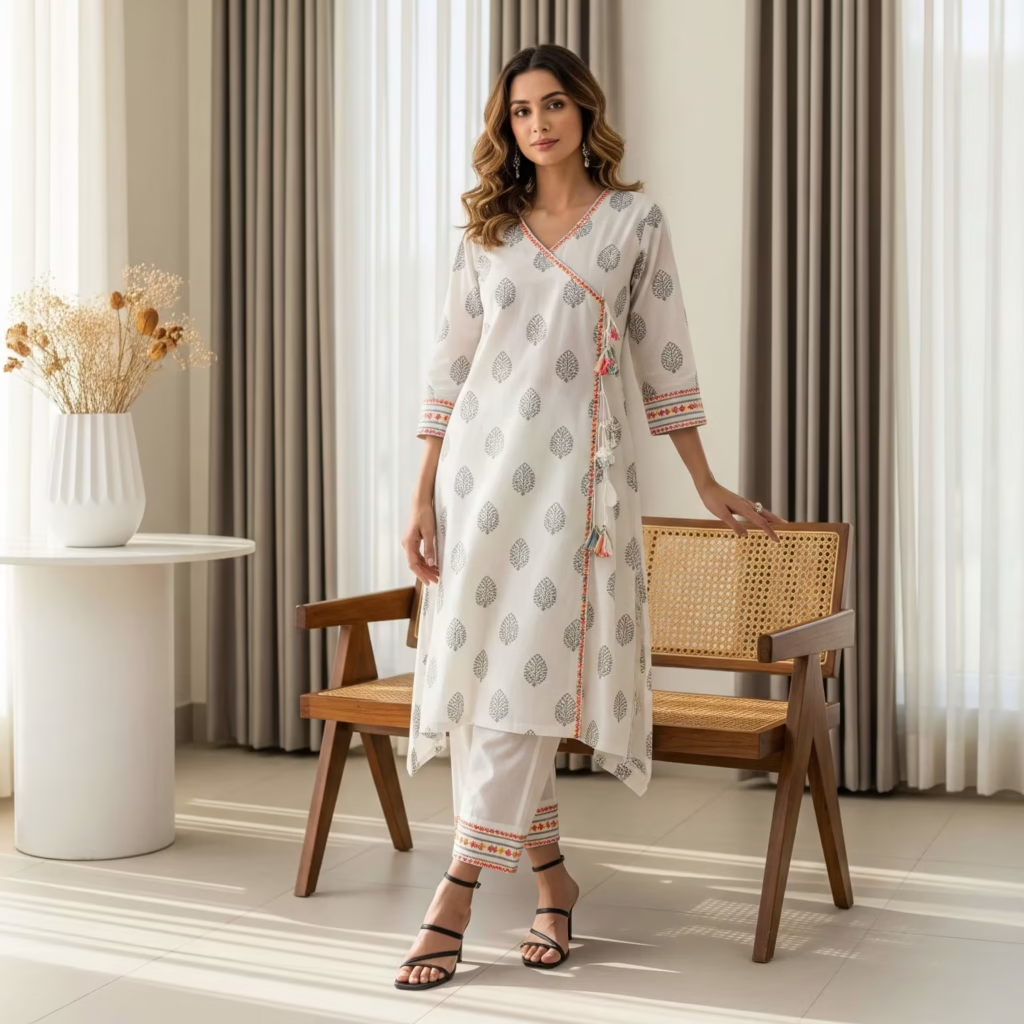
Let’s talk about a feeling most women know too well.
There’s an important event coming up—a wedding, a festive gathering, or a family celebration. You open your wardrobe, and suddenly nothing feels right. The outfits you loved last year feel outdated. The ones you bought recently don’t suit the occasion. You scroll endlessly through online stores, saving screenshots, opening tabs, and second-guessing every choice.
Is it too heavy? Too plain? Will it suit my body type? Will I feel comfortable for hours? Will it look good in photos?
This isn’t just shopping fatigue. It’s decision overload.
Now imagine a world where those questions disappear within minutes. Where instead of confusion, you feel clarity. Instead of anxiety, you feel excitement. That’s exactly where artificial intelligence is changing the way women choose salwar suits—and it’s happening faster than most people realize.
Why Salwar Suit Shopping Feels So Overwhelming Today
Salwar suits are timeless, but choosing the right one has become more complicated than ever. Today’s options include countless fabrics, silhouettes, embroidery styles, dupatta drapes, and color palettes. Add different occasions, weather conditions, and personal comfort into the mix, and even experienced shoppers feel lost.
The problem isn’t lack of choice—it’s too much of it.
Traditional shopping assumes all women with the same size want the same look. But modern women are far more diverse. One person may want elegance without heaviness. Another may prioritize ease of movement. Someone else may want tradition with a contemporary edge.
This is where generic filters fail—and intelligent personalization steps in.
The Silent Styling Mistakes Most Women Don’t Realize They’re Making
Before understanding how AI helps, it’s important to recognize where things usually go wrong.
1. Dressing for the Occasion, Not the Environment
Many women choose outfits based only on the event type. A wedding is a wedding—right? Not exactly. An outdoor afternoon function requires entirely different fabrics and silhouettes than an indoor evening ceremony. Ignoring weather, venue, and duration often leads to discomfort and regret.
2. Trusting the Mirror Too Much
What looks good on a hanger or model doesn’t always flatter every body type. Straight cuts, flared pants, or anarkalis can visually change proportions. Without guidance, many women end up with outfits that technically fit but don’t enhance their shape.
3. Holding Onto Outdated Preferences
We all have styles we once loved. But fashion evolves, and so do we. Clinging to silhouettes or color combinations that worked years ago can unintentionally age a look, even when the outfit itself is beautiful.
These mistakes are common—not because women lack taste, but because they lack personalized insight.
How AI Becomes Your Personal Style Intelligence
Artificial intelligence doesn’t replace personal taste—it sharpens it.
Instead of overwhelming you with thousands of options, AI focuses on understanding you. Your lifestyle, your comfort zone, your preferences, and your practical needs. Within minutes, it can narrow down choices that would otherwise take hours to find.
Think of it as a silent stylist working in the background, filtering out what won’t work so you only see what will.
Step One: Understanding Your Personal Style Blueprint
AI begins by learning how you live, not just how you dress.
Instead of asking generic questions like height and size, it looks at:
How active you are during events
Whether you prefer subtle elegance or visible statement pieces
Which outfits in the past made you feel confident
How much effort you want to put into styling
This creates a personal style blueprint—your fashion personality. Some women naturally gravitate toward soft minimalism. Others love rich textures and royal aesthetics. Neither is better; they’re simply different.
Once this blueprint is formed, every recommendation becomes more accurate.
Step Two: Decoding the Occasion in Detail
Not all weddings are the same. Not all festivals feel the same. AI understands this difference.
Instead of choosing an outfit for “a wedding,” it analyzes:
Location and setting
Time of day
Season and climate
Your role at the event
Level of movement required
A daytime garden function calls for breathable fabrics and softer tones. A night celebration may allow deeper colors and refined embellishment. AI doesn’t guess—it calculates suitability.
This level of detail ensures you don’t just look good, but feel right in what you wear.
Step Three: Seeing the Outfit Before You Buy It
One of the biggest fears in online shopping is disappointment on delivery day.
AI reduces that risk by helping you visualize outfits more realistically. Through virtual previews and smart adjustments, you can experiment with lengths, colors, and styling details before committing.
You’re no longer imagining how something might look. You’re making informed decisions with confidence.
This transforms shopping from a gamble into a controlled, enjoyable experience.
Step Four: Styling Beyond the Suit
A salwar suit is never just a salwar suit.
The neckline, dupatta drape, footwear, jewelry, and even bag choice all contribute to the final look. AI treats the outfit as a complete visual story, not a single product.
It helps balance:
Embroidery with accessories
Fabric flow with footwear height
Color intensity with jewelry tone
The result is a cohesive look that feels intentional rather than overdone.
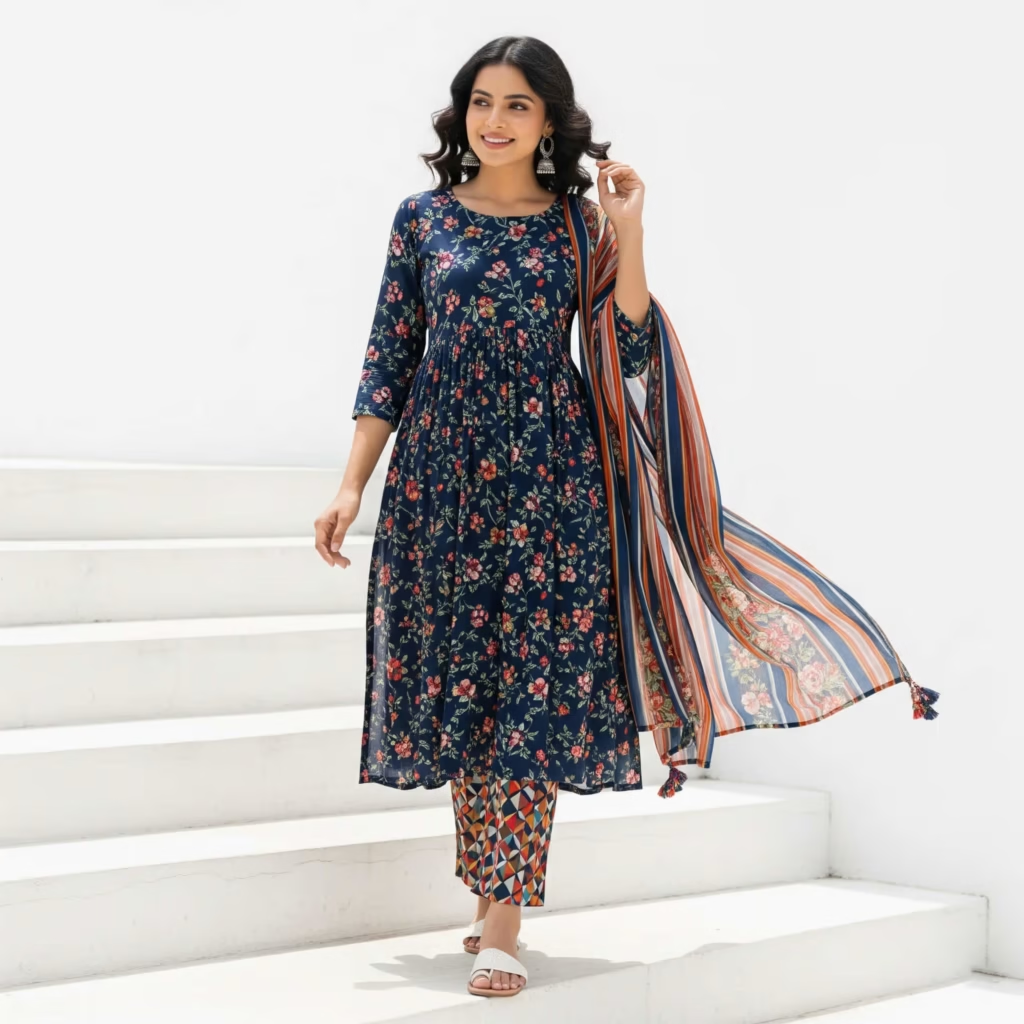
Smart Fashion for Real Life, Not Just Photos
Modern women want more than beauty. They want practicality.
AI-assisted fashion now considers:
Breathability for long wear
Ease of movement for social events
Durability for repeated use
Versatility across occasions
This means investing in outfits that don’t just look good once, but continue to feel relevant and comfortable over time.
Giving New Life to Old Favorites
One of the most underrated benefits of AI styling is revival.
Many women own beautiful salwar suits that sit untouched because something feels “off.” AI can identify what’s holding the outfit back and suggest small changes—like altering a neckline, updating a dupatta, or adjusting styling—to make it feel current again.
This reduces waste, saves money, and strengthens emotional connection with clothing you already own.
Why This Approach Works Better Than Traditional Shopping
Traditional shopping relies on trial and error. AI relies on pattern recognition and personalization.
Instead of asking, “Will this work?” you move to “This already fits my needs.”
That shift alone removes most of the stress associated with outfit selection.
A More Mindful Way to Build a Wardrobe
When decisions become intentional, wardrobes become lighter but more powerful.
AI encourages:
- Thoughtful purchases
- Fewer impulse buys
- Long-term satisfaction
- Stronger personal style identity
This aligns perfectly with the modern shift toward conscious fashion.
Final Thoughts: Style Without Stress Is Possible
Effortless style doesn’t come from owning more clothes. It comes from owning the right ones.
AI doesn’t take creativity away—it removes uncertainty. It helps you focus on how you want to feel, not just what you want to wear.
When shopping becomes intuitive instead of exhausting, fashion turns back into what it was always meant to be: a source of joy, confidence, and self-expression.
Your next perfect salwar suit doesn’t need hours of scrolling.
It needs clarity—and that’s exactly what intelligent styling delivers.